Life OS
One place to turn what matters into a plan, follow through, and see what actually happened.
Building a system for my own life
I care about ambitious work, motherhood, learning, health, and the people around me. Keeping all of those priorities in motion means remembering routines, making decisions, and noticing when something needs to change.
I built Life OS to bring that coordination into one operating loop: define a goal, approve the plan, act, record the outcome, and review. I use it to make commitments visible and keep my own needs in the picture.
Explore the community edition on GitHub ↗Built and used personally. The community edition is a local, single-user prototype with synthetic demo goals.
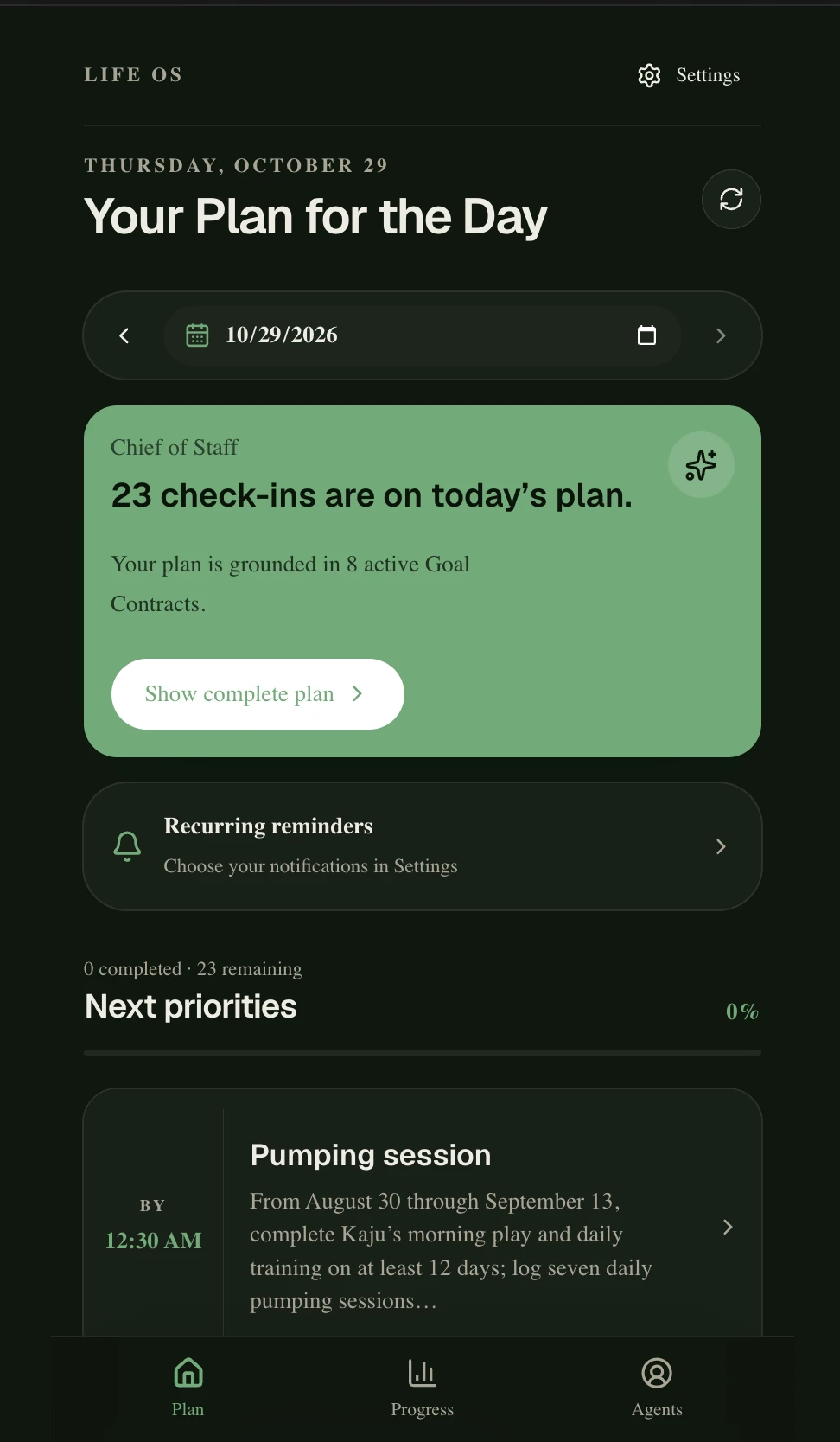
From intentions to recurring commitments
A Goal Contract gives a goal an owner, success criteria, metrics, routines, and a timezone. Approving the goal and approving its tracking prompts are separate decisions. Agreeing that something matters should not silently sign me up for every reminder.
Plan brings the approved check-ins into the day. Progress keeps scheduled work separate from recorded outcomes. Ongoing goals continue until I choose to amend, pause, or complete them.
Specialists with clear boundaries
The Chief of Staff is the default coordination role, alongside specialists for areas such as career, learning, fitness, wellbeing, and operations. The community edition defines twelve roles and invokes one selected role per chat request, using explicit selection or simple keyword routing.
AI provides context and advice. Software handles schedules and progress calculations. Durable memory needs confirmation, and a suggestion in chat does not itself change a goal or execute an external action.
The question I keep returning to
What should I delegate — and what do I want to stay close to? Building this has made that question concrete: which decisions need my approval, what counts as evidence of progress, and how much context an agent should receive.
I am still experimenting. Next steps include goal creation in the web interface, richer conversation context, and more reliable reminder delivery. The product hypothesis — whether one coherent loop reduces the effort of coordinating life — still needs evaluation beyond my own use.